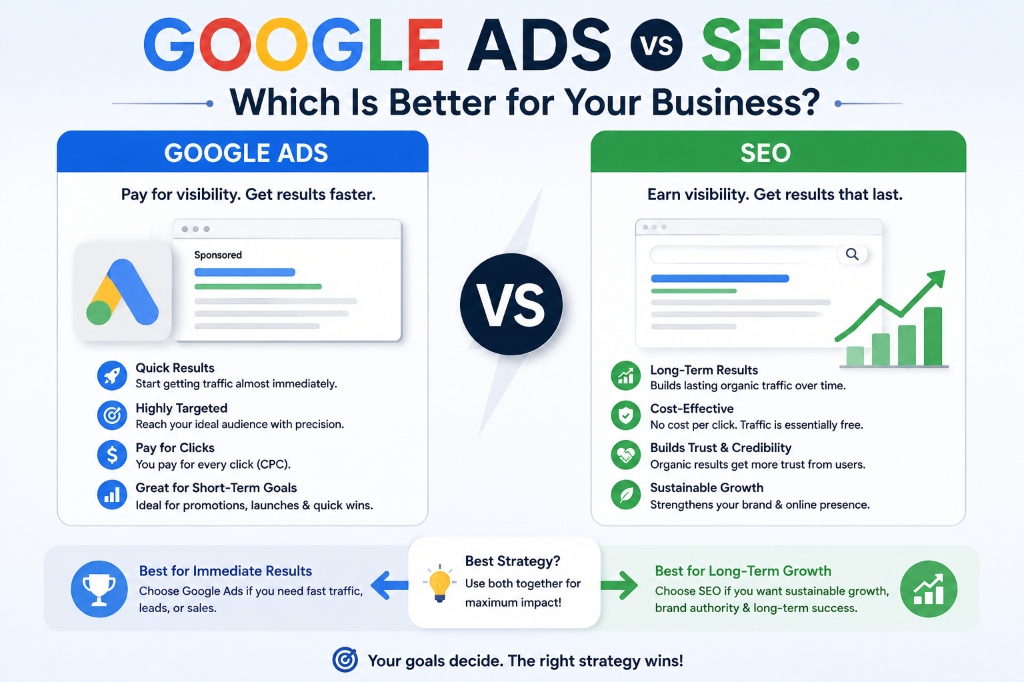
When expanding your online presence, the Google Ads vs SEO debate is inevitable. Both channels aim to position your business in front of searching customers, but they operate on very different timelines, budgets, and strategic structures.
This comparison will help you align your digital marketing strategy with your near-term cash flow and long-term asset growth goals.
1. Google Ads (PPC): Speed and Control
Google Ads offers immediate search visibility. By launching a campaign, you can show up at the top of Google for target keywords today. You have direct control over bid budgets, landing page destinations, and keyword matches. The downside? Once your budget stops, your traffic stops instantly.
2. Search Engine Optimization (SEO): Compounding Value
SEO is a long-term investment. It takes months of technical optimization, content creation, and link building to rank organic listings on page 1. However, once you rank, that traffic is free and continues to compound over time, providing a much higher ROI in the long run.
3. The Cost Comparison Analysis
Google Ads charges you per click (PPC), meaning costs scale directly with traffic. SEO requires upfront investment in content and optimization, but the cost per visit drops dramatically as organic sessions scale, making it highly sustainable.
| Feature | Google Ads (PPC) | Search Optimization (SEO) |
|---|---|---|
| Time to Traffic | Immediate (Hours) | Slow (3-6 Months) |
| Cost Structure | Pay Per Click (PPC) | Fixed Upfront Investment |
| Sustainability | Stops when budget ends | Persistent organic visibility |
| CTR Distribution | 2-3% click-through rate | 30%+ CTR for rank 1 |
"Google Ads is renting traffic; SEO is owning traffic. A balanced marketing strategy uses ads to generate revenue today while building SEO equity for tomorrow."
4. Targeting Commercial vs Informational Intent
Google Ads is excellent for high commercial intent keywords like 'hire SEO expert Chennai' where users are ready to buy. SEO is perfect for capturing the top of the funnel with informational searches, building brand trust early in the buyer journey.
5. The Hybrid Growth Strategy
The most successful brands do not pick one over the other. Use Google Ads to bid on competitive terms and test which keywords convert best, then optimize your SEO strategy to rank organically for those high-value terms.
Key Takeaway
If you need leads this week to fund operations, start with Google Ads. If you want to build a sustainable lead machine for the next decade, invest in SEO.
By focusing on these core elements, Balamurugan P. helps brands scale their monthly traffic and achieve sustainable growth. Let's start optimizing your online visibility today.
Frequently Asked Questions
Neither is objectively 'better' — they serve different purposes. Google Ads is best for instant leads and launches, while SEO builds long-term organic authority and free traffic.
No, paid search campaigns do not directly affect organic SEO algorithms, but they help test which keywords convert best before you invest in long-term SEO.
Startups often split budgets 70% paid ads (for immediate cash flow) and 30% SEO. As organic authority grows, you can gradually shift more budget to SEO.